SACSCOC-accredited institution Diplomado Managua

Diplomado in Principles of Information Security

Zero Trust architectures, NIST and ISO 27001, with AI-assisted threat detection.

40
hours
SP
Language
1
Campus
14:1
Student-faculty ratio

Program information

Get the curriculum, requirements and costs.

A U.S. degree.

Accredited by SACSCOC — the same commission that accredits universities across the United States.

Earned in Nicaragua.

San Marcos and Managua campuses. No visa, no relocation, no leaving your family behind.

About the program

What you'll
study

This diplomado offers integrated training in network security and advanced architectures, covering everything from the protection of critical services and authentication through to malware analysis.

With a practical focus, the program aligns incident management with international standards (NIST, ISO 27001, CIS) and integrates the use of artificial intelligence to optimize threat detection.

Professionals develop skills to manage risk, ensure regulatory compliance (PCI DSS) and audit high-level security architectures.

Who it's for

IT professionals and advanced students seeking to specialize in cybersecurity architecture and infrastructure protection — network administrators, security officers, SOC analysts, auditors and technology managers.

Program facts

Duration

40 hours

Language

Spanish

Format

Hybrid · 6–8 pm

Campus

Managua

Intakes

Varies by program and campus — confirm with an advisor

Awarded by

Keiser University, accredited by SACSCOC

Apply now Ask a counselor
Learning outcomes

What you'll
be able to do

Threat identification

Mitigating threats across traditional networks, mobile, IoT and embedded systems.

Cryptography and PKI

Implementing cryptographic protocols and authentication systems.

Detection strategies

Data protection under an integrated information-security approach.

Standards alignment

NIST CSF, CIS Controls, ISO 27001 and PCI DSS.

AI-assisted response

Using AI for anomaly detection and incident analysis.

Executive reporting

Producing maturity reports and executive recommendations.

Curriculum

How the program
is structured

Week 1 · Cyber-resilience architecture

Current threat landscape · Zero Trust principles · NIST CSF, CIS Controls and ISO 27001 · Maturity assessment and gap analysis · AI applied to cybersecurity

Week 2 · Information protection and controls

Disk, file and mail encryption · Information classification · Access and privilege control · Data-loss prevention · AI for anomalous behavior detection · Risks of generative AI in corporate environments

Week 3 · Monitoring, detection and response

Asset visibility and monitoring · EDR/XDR threat detection with AI · Behavior analysis · Automated AI-assisted response · Incident management · Ransomware recovery · Practical incident simulation

Week 4 · Risk management and compliance

Technology risk identification and analysis · Risk prioritization with AI support · Mapping controls to NIST, CIS, ISO and PCI · Email security and phishing detection · Final executive report

Course sequence is indicative. Your admissions counselor will confirm the current plan of study.

Career fields

Where this
takes you

Security analyst

SOC monitoring, detection and response.

Security officer / CISO track

Governance, risk and compliance leadership.

Network administrator

Securing infrastructure and access.

IT auditor

Auditing security architectures and controls.

Compliance specialist

PCI DSS, ISO 27001 and regulatory alignment.

Technology manager

Leading security strategy.

Requirements

What you need
to apply

High school diploma

Bachiller or equivalent secondary qualification.

Government ID

Cédula or valid passport.

A laptop

Required for the on-campus sessions.

Completed application

Submitted online or through an advisor.

Process

Four steps

1

Let's talk

A counselor confirms this is the right program for your goals.

2

Complete your file

We guide you document by document. You never do it alone.

3

Get admitted

We review scholarship and financing options together.

4

Start classes

Registration, orientation and your first day as a Keiser student.

Who teaches you

Program faculty

Felix Urrutia
Program Director

Felix Urrutia

Master · IT/Computer Sciences

M.B.A in Technology Management, Keiser University, Fort Lauderdale, Technology Management

Graduate Certificate in Web Application Development, Boston University

B.S. in Software Engineering, Keiser University, San Marcos, Software Engineering
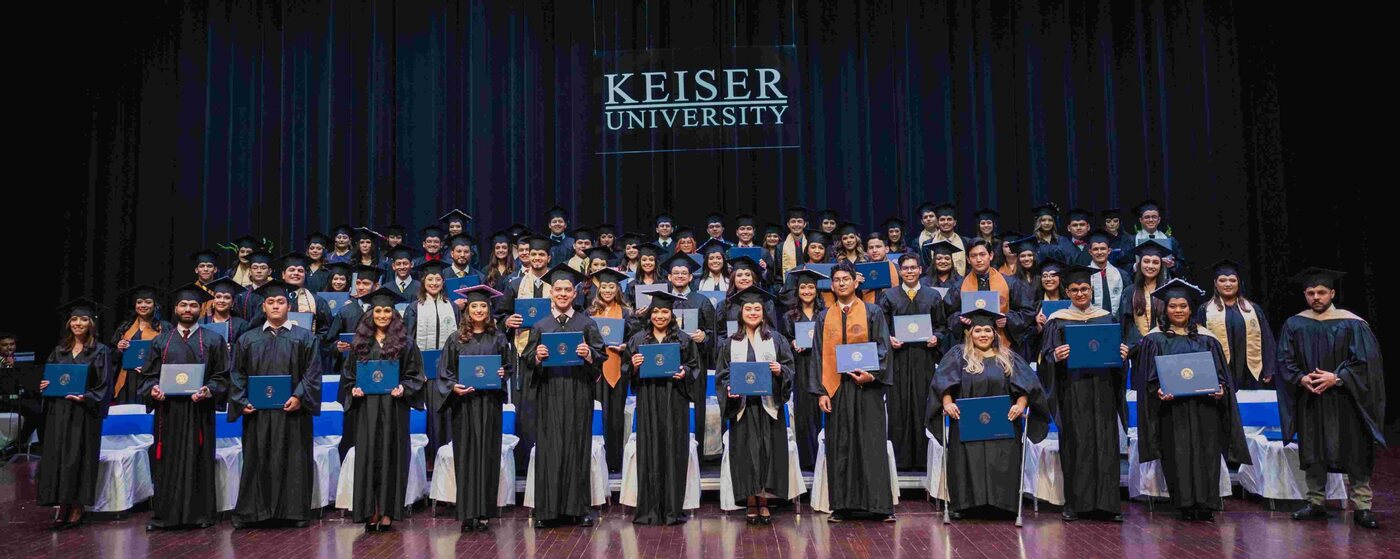
Keiser University Nicaragua graduation
Faculty

109 instructors

Our faculty combines international graduate training with active professional experience in Nicaragua.

Meet the faculty
Professor teaching a class
Small classes

14:1

A 14:1 student-faculty ratio across the university. Class sizes vary by program, but you are taught in a group small enough to be known by name.

Our model
Your next step

Ready to start?

Talk to an admissions counselor about Diplomado in Principles of Information Security. No commitment, no cost.