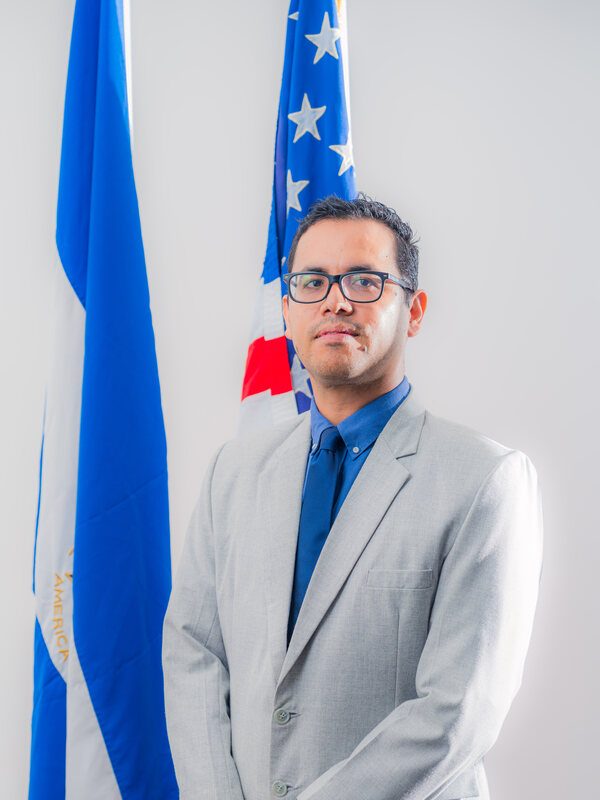
Full-Time Professor
Dustin Amador
Master · Psychology
M.S., Clinical Psychology, Catholic Pontifical University of Chile, Chile
B.A. Psychology. National Autonomous University of Nicaragua, Nicaragua

Human behavior, mental processes, communication and research. Taught in English at San Marcos and in Spanish at Managua.
Get the curriculum, requirements and costs.
A counselor replies within 24 hours. By submitting you agree to our privacy policy and to be contacted about your enquiry.
Accredited by SACSCOC — the same commission that accredits universities across the United States.
San Marcos and Managua campuses. No visa, no relocation, no leaving your family behind.
The Psychology curriculum provides extensive instruction in many facets of human behavior, mental processes, communication, research and technical writing.
Courses include forensic, sports and positive psychology, as well as the core subjects that prepare students for advanced academic programs.
The program emphasizes the relationship between neuroscience and behavior, and the ethical and humane application of treatment in research projects.
Students who want to understand why people do what they do, and who intend to continue into graduate study or applied practice.
4 years
English at San Marcos · Spanish at Managua
On campus
San Marcos (in English) · Managua (in Spanish)
Varies by program and campus — confirm with an advisor
Keiser University, accredited by SACSCOC
The major theoretical frameworks and what each one explains.
Designing studies and reading evidence critically.
How biology and psychology inform each other.
Forensic, sports and positive psychology.
Consent, confidentiality and humane treatment.
Communicating findings to specialist and general audiences.
General Psychology · Developmental Psychology · Statistics · Academic Writing
Social Psychology · Cognitive Psychology · Biopsychology · Research Methods I
Abnormal Psychology · Personality Theory · Forensic Psychology · Sports Psychology
Positive Psychology · Counselling Theory · Research Methods II · Capstone Project
Course sequence is indicative. Your admissions counselor will confirm the current plan of study.
Practices, hospitals and mental-health centers, after graduate study.
Selection, performance evaluation and organizational development.
School counselling, learning support and student programs.
The justice system, assessment and reintegration programs.
Universities, NGOs and international development organizations.
Teams, federations and high-performance programs.
Official transcript or secondary school diploma.
Cédula or valid passport.
Recent, in official format.
Submitted at ku.edu.ni/newappform.
A counselor confirms this is the right program for your goals.
We guide you document by document. You never do it alone.
We review scholarship and financing options together.
Registration, orientation and your first day as a Keiser student.
Master · Psychology
M.S., Clinical Psychology, Catholic Pontifical University of Chile, Chile
B.A. Psychology. National Autonomous University of Nicaragua, Nicaragua
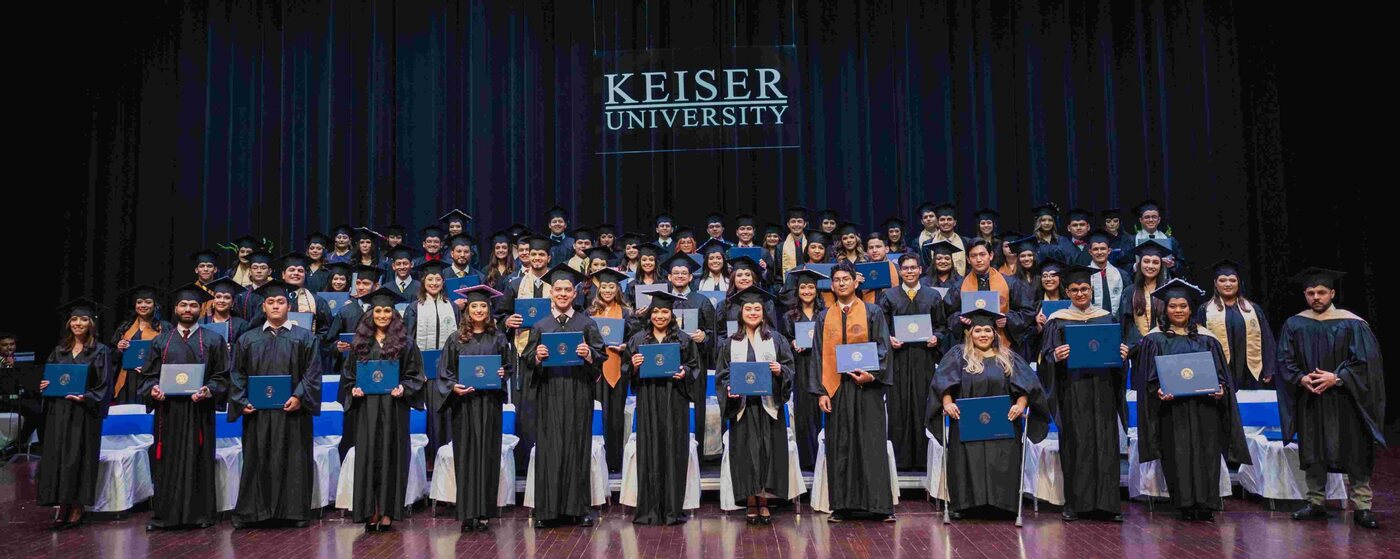
Our faculty combines international graduate training with active professional experience in Nicaragua.
Meet the faculty
A 14:1 student-faculty ratio across the university. Class sizes vary by program, but you are taught in a group small enough to be known by name.
Our model
Prepares students for a successful career in the modern business world.
View program
Nicaragua's first Artificial Intelligence degree — theory and hands-on practice.
View program
Software engineering as a business-oriented discipline focused on problem-solving.
View programTalk to an admissions counselor about Bachelor of Arts in Psychology. No commitment, no cost.